Based in Valencia, Survival Spanish offers small, hands-on Spanish classes designed to help you become more comfortable understanding and speaking the language so you can better enjoy life here!
Gain practical, conversational skills aimed at improving daily life
Learn in small, interactive groups, not overcrowded classrooms
Have fun & meet like-minded expats going through similar experiences
Not speaking Spanish can be intimidating.
Quite simply, that makes it harder to get the most of life here in Valencia.
Survival Spanish is the answer.
For over 7 years, we’ve been delivering real world, practical Spanish lessons in Valencia for English-speakers from a teacher who has walked in your shoes.
Learn exclusive, proven methods and skills to get you managing daily situations from Lesson 1.
We promise: this is not your typical Spanish class.
Stop Struggling. Start Speaking!
OMG, these classes are so helpful! I was stuck in a traditional academy for months and not progressing. Survival Spanish is much better for me and my needs at this stage of my life!
-Roman C.
A wonderfully fun and engaging way to learn Spanish! Esther’s teaching style is motivating and entertaining. I’ve been a student for 5 years and still look forward to my weekly lessons. Highly recommend!!!
-Erin D.
Esther has the most amazing way to make Spanish come alive. Her methods are both unique and entertaining and her passion shines through in every class. Survival Spanish has been the best way to learn for me, in all the many things I’ve tried and I look forward to my classes each week. I cannot recommend enough!
-Dervla P.
I have enjoyed my classes at Survival Spanish. The teacher is patient and focuses on conversation. I plan to continue my education there until i am fluent. I highly recommend.
-Julie M.



Survival Spanish groups range from pure beginners with zero Spanish to more intermediates with a bit of a foundation already.
You are placed with a group that corresponds to your particular level. Groups consist of 2-3 people with a maximum of 4 per session. The duration of each class is 60 minutes, normally held Monday-Thursday each week at our studio on the Calle Jorge Juan, 8 (Piso 6, Puerta 14), right next to the Mercado de Colon.
Although some grammar is integrated into the lessons, this is NOT designed to be a grammar-driven class like you may find in typical academies around town. Instead, sessions focus more on situational-oriented vocabulary and conversation…with learning short cuts, useful tips and plenty of fun.
Choose the membership type that best suits your needs. Click the corresponding button to make a PayPal payment. Note: you can pay with a credit card without logging into PayPal.
For first time students, you’ll also need to pay the one-time matriculation fee located right below the pricing table.
NOTE: payments can also be made via Bizum to 639 370 309 or by bank transfer — IBAN details available on request
Note: the button above is for PayPal payment payments (credit cards accepted). Alternatively, payments can also be made via Bizum to 639 370 309 or by bank transfer — IBAN details available on request
Note: the button above is for PayPal payment (credit cards accepted). Alternatively, payments can also be made via Bizum to 639 370 309 or by bank transfer — IBAN details available on request
First-Time Students Only
In addition to the fees above, all first time Survival Spanish students are required to pay a one-time matriculation fee of 40 euros. Payment can be made using the button below.
Alternatively, you can pay the matriculation fee via Bizum to 639 370 309 or by bank transfer — IBAN details available on request.
It depends on the format but here are some general parameters. Public options are cheapest: CEPA adult-education classes are essentially free, and the EOI runs €60–300 for a whole academic year. Private academies charge €600–900 a month for intensive courses at 20 hours a week, or €320–480 semi-intensive. One-to-one professional tutors in Valencia typically run €32–45 an hour.
Survival Spanish is €160 a month (or less if you pay for the semester upfront) for two 60-minute sessions a week, plus a one-time €40 matriculation fee for first-time students. That works out at around €20 an hour in a group of two to four — roughly half the cost of a private tutor, without an academy’s 20-hour-a-week commitment. Book a free meeting if you’d like to talk it through.
Small groups only. Sessions run with two to three people and never more than four, and you are placed with a group at your own level. That gives you the conversation practice a private lesson can’t. Hearing other people make and correct the same mistakes is a large part of how adults actually learn to speak. Esther occasionally will do some limited one-on-one work with students with very specific short-term needs, but that would be scheduled and billed separately.
Most academies are built around a grammar syllabus and an exam at the end of it, in classes of a dozen or more. This isn’t that. Sessions are built around situations you’ll actually be in this week — the bank, the doctor, the neighbor who talks too fast — and grammar is introduced more naturally, only where it earns its place. Groups are two to four people, so you can’t hide at the back, and there’s no exam (other than testing your skills in the outside world 🙂 We’ve written more on what to look for in a small, hands-on Spanish course in Valencia.
If cost is your main constraint, the EOI is hard to beat — €60–300 for an academic year is a genuine bargain, and the curriculum runs from A1 all the way to C2. The trade-offs are class size, pace and admissions: places are limited and heavily oversubscribed, terms are fixed to the academic calendar, and classes are large and taught to a syllabus rather than to you.
Come to us if you want small groups, conversation from day one, and likely a bit more fun!
Yes. Book a free meeting first with Esther. It’s normally a conversation about where your Spanish is now, what you actually need it for, and which group would suit you. Sometimes, Esther will invite you to sit in on a class to see what it’s like. No payment and no commitment until you’ve had it.
Yes — beginner groups often start from genuinely zero. You won’t be seated with people who already have a strong foundation, because groups are formed by level. The first sessions focus on the handful of things you need most in daily life here, so you leave your first class with something you can actually use.
Not remotely. Esther regularly teaches students in their 40s, 50s, 60s and even 70s. Adults in that range often progress faster than younger learners, because they turn up consistently, they know exactly why they are there, and they are not trying to pass an exam.
What actually separates the students who get furthest has had nothing to do with age — it is whether they put in some time outside the classroom. Watching TV in Spanish, keeping notes, reading books, working through the odd grammar exercise. Over the years that has mattered far more than how old anyone was when they started. There’s more on the benefits of learning Spanish as an adult in Valencia on our blog.
That’s what the free meeting is for. It’s a conversation rather than a written test — the fastest way to hear where you actually are is to talk. You’re then placed in a group that matches both your level and the schedule you can commit to. Get in touch to arrange one.
English is there when you need it, which matters more than it sounds. Esther is fluent — she spent nearly twenty years in the United States and taught Spanish at Arizona State University…so when something won’t land in Spanish, she can explain it properly and move on, rather than leaving you nodding along. As your level rises, the English falls away.
In a group of two to four at a matched level, there isn’t really a back row to fall behind in — and that’s the point. Groups are formed by level, so the gap between the strongest and weakest person is small by design. If a group turns out to be a poor fit, Esther will try to move you to a different group, rather than leaving you to struggle.
This is the single most common thing we hear. Apps are good at vocabulary and poor at the thing that actually blocks you — producing speech in real time, under mild social pressure, when someone is waiting for your answer. That skill only develops by doing it with other people. A year of Duolingo isn’t wasted; you’ve built a vocabulary base. What’s missing is the speaking, and that’s the part a small group with Esther’s approach fixes fastest.
At our studio on Calle Jorge Juan 8 (Piso 6, Puerta 14), directly beside the Mercado de Colón in the Eixample. It’s a short walk from Ruzafa, Gran Vía and the centre, and close to Colón metro. Classes run Monday to Thursday. If you’re weighing up options, we’ve written a guide to finding Spanish classes near you in Valencia.
Spanish is enough. Valenciano is co-official and you’ll see it on street signs, official forms and public transport announcements, but essentially everyone in the city speaks Castilian Spanish and every service will deal with you in it. Recognizing a little Valenciano is useful for reading signage; speaking it isn’t necessary for daily life in Valencia.
Same language, with some real differences in daily use, similar to what you might find with English in the US vs. the UK or Australia. The main ones are vosotros for the informal plural “you”, which Latin America doesn’t use; the c and z pronounced as a soft th; and a good deal of local vocabulary and accent differences. If you learned Spanish in Latin America you’ll be understood perfectly here — you’ll just want to tune your ear and pick up the local forms, which happens quickly once you’re using them daily.
No — and that’s deliberate. These classes are built for people who want to live more comfortably in Spanish, not to pass an exam. If you need a DELE or SIELE certificate for a visa, a job or a university place, an exam-prep academy will serve you better. If you want to be able to talk to your neighbors, the pharmacist or somebody you meet on the street, you’re in the right place.
No. Spain’s student visa requires an accredited full-time course of at least 20 hours a week, and these classes are two hours a week by design. If you need a course for visa purposes, look for an accredited academy offering a 20-hour intensive programme with the paperwork to match.
For a complete beginner doing two sessions a week and using the language in between, expect to handle everyday errands — shops, appointments, small talk with neighbours — within six to twelve months, and to hold a comfortable conversation somewhere past the first year. The variable that moves this most isn’t talent, it’s how much Spanish you use outside class. Students who make themselves order in Spanish every time move roughly twice as fast. Our field guide to learning Spanish faster in Valencia goes into what actually accelerates this.
We get it but stopping and starting is disruptive both to your progress in Spanish and to the scheduled classes. You can only truly cancel once, which means you won’t be returning. Alternatively, you can choose to “hold your spot” for a particular month for a total of 60 euros that month. This ensures your place in your normally scheduled class is held. You may also want to consider the Semester Membership plan that includes a discount to help offset some missed classes.
The minimum commitment for Spanish lessons in Valencia with Survival Spanish is one month. Again, these particular Spanish lessons in Valencia aren’t for students looking to study here and there, on and off on a whim. If that’s your style, Survival Spanish is probably not the best fit.
In the early days, we tried to “pay as you go” model but it wasn’t reliable, predictable or sustainable due to constantly shifting schedules and last minute cancellations.
For the past few years, we’ve operated more like a school in that regard and prefer to work with students who are truly focused on improving their Spanish. We’ve found this to be the effective approach, both for Esther and her student cohort groups.
No, that plan already includes a discount for committing to those months (September-end of December for Semester 1 and then January through the end of June for Semester 2). The respective discounts help offset the cost on potential missed classes during those months. As such, there is no “hold your spot” option for an entire semester.
Like a school, this is a “use it or lose it” model so we may not be the right fit for you.
If you miss class, there are no refunds. You may want to consider Semester Membership plan that includes a 20% discount to help offset some missed classes. If you’ve missed multiple classes due to a serious illness, Esther may look to slot you into some other makeup sessions on a case-by-case basis.
If Esther needs to cancel a class for whatever reason, however, she will indeed work with you to schedule a make-up session.
No, like a school, Survival Spanish observes all Valencian and Spanish holidays and will be closed on those days. If your class falls on a holiday, Esther may look to schedule a make-up class or two for those interested.
We’ve found that at least twice a week is optimal to accelerate and maintain your learning journey with our Spanish lessons in Valencia. Less than that is simply not as effective or ideal. Esther may make a special exception in some cases so simply contact us to further discuss and receive a custom quote for once a week classes.
Most Survival Spanish students choose twice a week as this effectively balances learning with free time. If you’re interested in a more intensive approach with three or more Spanish classes in Valencia per week, contact us to further discuss and get a quote. This is not the norm but, in the past, Esther has worked with students needing more classes for a particular period of time.
Yes, new students for our Spanish lessons in Valencia are required to pay a one-time fee for materials, coffee, water etc. of 40 euros. For returning students, there is no matriculation fee.
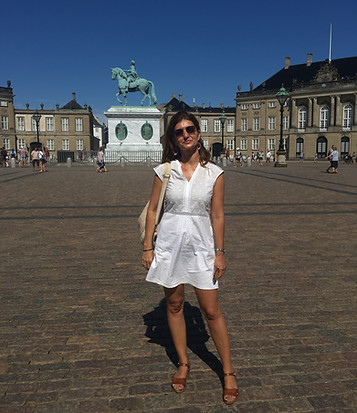
Survival Spanish is taught by Esther Navarro. As a native of Alicante married to an American (he helps with marketing stuff), Esther is fluent in English and spent nearly twenty years living in the US…with invaluable cross-cultural knowledge that will come in handy during your classes.
Esther taught Spanish at Arizona State University while doing a Master’s program there so you know you’re in good hands with an experienced teacher. She loves to travel, cook and is passionate about sharing her knowledge of Spain and the Spanish language. She has been teaching Survival Spanish in Valencia since 2019 to over 100 students.
Finding the right Spanish classes in Valencia can be tricky. Here’s a quick checklist of what we focus on vs. what we don’t!